


Reflections on the rise of “Residential School denialism” and why some do not want to believe that there could be a future for Indigeneity.

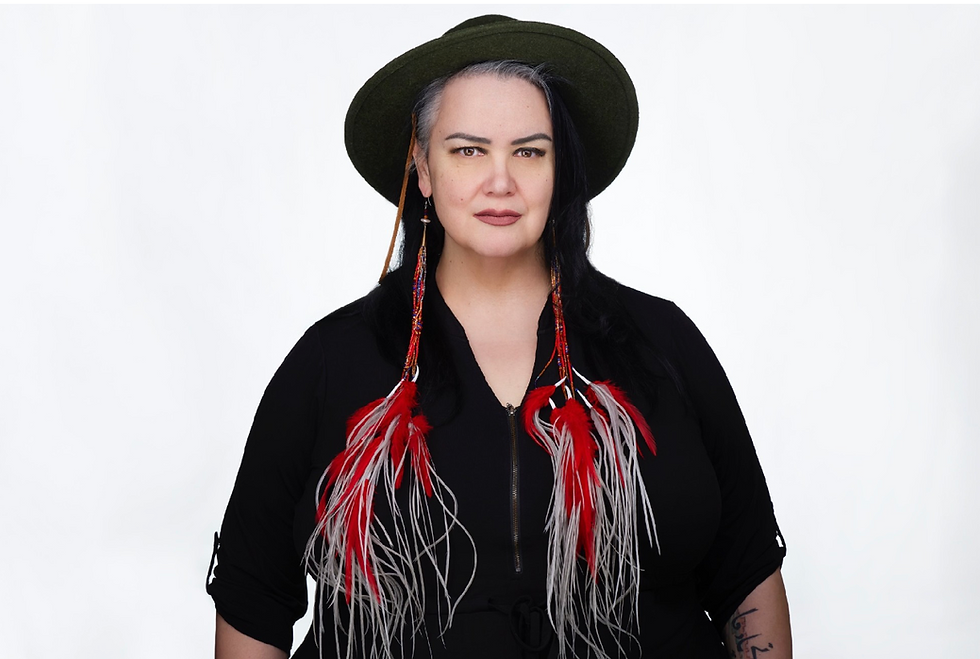
By Tamara (Baldhead) Pearl
Many Canadians are navigating where we stand 10 years after the release of the Final Report of the Truth and Reconciliation Commission [TRC]. Important milestones have been reached, but meeting the 94 Calls to Action faces unique challenges.
As the late Honourable Murray Sinclair so poignantly stated, “It will take years, perhaps generations [but] a period of change is beginning that if sustained by the will of the people, will forever realign the shared history of Indigenous and non-Indigenous peoples in Canada.” This “will of the people” is under attack today. It is undeniable the current geo-political climate is fraught with the surge of fascism, threats on nation-state sovereignty and weaponization of economic integration. This sentiment is compounded by a rise in incivility due to the COVID-19 pandemic, palpable in our communities.
In 2021, a discovery of 215 unmarked graves, using ground penetrating radar on the Kamloops Indian Residential School site renewed collective grief among Indigenous peoples. Many Indigenous communities throughout the country followed with their own investigations, resulting in a Special Interlocutor appointed to investigate missing children, unmarked graves and burial sites, as reported in the TRC. The final report, released in October, 2024, estimated there were over 3000 child deaths, with the full number unknown. Thousands more children continue to be missing due to poorly kept or destroyed records. Special Interlocutor Kimberly Murray also had to contend with a deluge of denialism that seems to have only gained traction over the years. Recently, the far right OneBC party organized a rally for residential school denialism on the main UBC campus, but was met with an overwhelming counter protest.
This promotion of fascist ideology is fighting for entrenchment in our society and challenges Canada’s values of substantive equality that is the animating norm of our Charter of Rights and Freedoms. Some denialists are emboldened by this promotion, as evidenced starkly by recent campus events. However, a more subtle form of residential school denialism can take hold in the mushy middle because of how easy it is to slip into “whataboutisms”.
“Whataboutism” fallacies downplay the harms of residential schools by arguing that Indigenous children were not unique: for example Canada took away the Doukhobor's children and put them in sanitoriums similar to a residential school in the 1950s in British Columbia, where they faced extraordinary abuse including being at the mercy of sexual offenders. Poor and delinquent children were also institutionalised and victimised; others were sterilized. People committed to righting the wrongs of residential schools do not deny these heinous acts, they do not assume that only one people can be harmed by state action. Rather, they see overlapping experiences of oppression as a way to move forward, together.
Still, there is nothing at all akin to the situation in which we all find ourselves immersed in Eurocentric discourse and thought. It is easy to get any reasonable human to agree that things like churches, utilizing the Indian Act to ban status Indians from bars or allowing serial sex offenders to have absolute impunity in their tenures at residential schools, are very horrible things. What distinguishes Residential Schools is that they were part of the bigger structures of settler colonialism, not just random horrors.
The schools followed on Indigenous displacement from their land, the destruction of Indigenous economies and resources, the introduction of diseases that decimated populations, the over-policing of Indigenous communities, and the control of access to food and the creation of starvation (see TRC Final Report pages 37-133 here). These are what make Indigenous peoples so often, as the Royal Commission on Aboriginal Peoples declares, "poor beyond poverty." It is this totalizing structure of “particular and distinctive historical and political processes” that cannot fathom Indigeneity as ongoing that has no comparison. If we lose sight of the fact that the residential school system was created as part of an overall context to assimilate Indigenous Peoples in the pursuit of land and resources here in Canada, then we engage in an endless blame game of “who was oppressed the most.”
Rather, we should think of the TRC's Calls to Action as a way of identifying and empowering Indigenous groups that need rights through self-determination as Indigenous Peoples, to assert against a majority state with a strong inclination to erase them – including the erasure of the history of the residential schools itself.


The title immediately caught my attention because it raises serious questions about fairness and the impact of financial problems on children. I remember studying a legal issue where understanding the wider effects of a policy was just as important as understanding the rule itself. I found Malaysia assignment help useful for organising my research and comparing different viewpoints. Legal decisions should always consider fairness and the people who may be affected by them.
The post raises an important point about why some people reject painful parts of history, even when survivors have shared their experiences. I remember studying a difficult history topic in school and realizing how important it was to listen carefully before forming an opinion. At that time, I used help with online class to stay organized while doing my reading and research. Learning about history with care can help us understand its lasting impact.
Landed here by pure accident while looking for something else, and now I'm hooked. My advice to anyone finding a single post is to browse the blog properly, because the archive is a goldmine. You clearly treat every piece like it matters. That kind of care stands out. Glad I wandered in.
I saw a message telling me to click here if I wanted a proper explanation of the topic and that turned out to be exactly right. The writing is clean and purposeful and the structure reflects genuine thought about what the reader needs to know. I found several points here that added real depth to my understanding of the subject. That doesn't happen often when you've already read a reasonable amount on a topic. I took notes while reading and have already used one of them in a practical context. Strong piece from beginning to end.
This informative post does exactly what the name suggests but goes further than most. The information here is well-organized, clearly presented, and genuinely useful rather than just comprehensive on paper. I found several points that added real depth to my understanding of the subject. That doesn't happen often when you've already read a reasonable amount on a topic. The writing is clean and the structure makes it easy to return to specific sections when needed. I've already done that once. Strong piece from beginning to end.